Our mission and Vision

To prevent and effectively treat Alzheimer’s disease AND RELATED DEMENTIAS

Our mission is to develop effective treatments and a path to prevention for Alzheimer’s disease and related disorders. We advance the science, test innovative methods and recruitment strategies, and conduct trials in the US and around the world.

Alzheimer’s disease is preventable. We know what starts the disease, and we have the tools to fix it.

People

Leadership

Paul Aisen

Paul Aisen,

Epstein Alzheimer’s Disease Director’s Chair, Professor of Neurology, Founding Director of Epstein Family Alzheimer’s Therapeutic Research Institute

Research Areas

  • Alzheimer’s disease (AD) clinical trial design
  • Remote assessment of AD risk
  • Primary prevention of AD

Michael Rafii

Michael Rafii,

Professor of Neurology, Medical Director of Epstein Family Alzheimer’s Therapeutic Research Institute

Research Areas

  • Clinical Trials for Alzheimer’s disease in Down syndrome
  • Biomarkers of Alzheimer’s disease in Down syndrome
  • AD Clinical Trial Design and Conduct

Robert Rissman

Robert Rissman,

Professor of Physiology and Neuroscience and the W.M. Keck Endowed Professor in Medicine, Director Neuroscience Translational Research Division and Biomarker Laboratory and Biorepository Director, Epstein Family Alzheimer’s Therapeutic Research Institute

Research Areas

  • Preclinical studies of Alzheimer’s Disease and Related Dementias (ADRD)
  • Experimental neuropathology of ADRD
  • Novel biomarker discovery

Rema Raman

Rema Raman,

Professor of Neurology, Director, Section of Biostatistics & Section of Participant Recruitment & Retention Epstein Family Alzheimer’s Therapeutic Research Institute

Research Areas

  • Biostatistics
  • Clinical trial design, conduct and analysis
  • Participant recruitment and retention science

Gustavo Jimenez-Maggiora

Gustavo Jimenez-Maggiora,

Assistant Professor of Research Neurology, Director of Informatics Section

Research Areas

  • Clinical Research Informatics
  • Remote Data Capture Systems
  • Natural Language Processing

Jeremy Pizzola

Jeremy Pizzola,

Director, Administration

Research Areas


Personal Stories

Why I Pursued Alzheimer’s Research

Paul Aisen

“After witnessing the devastating impact of Alzheimer’s on patients and families during my neurology training, I knew I had to dedicate my career to finding effective treatments. Every clinical trial we run brings us one step closer to a world without this disease.”

Michael Rafii

“Growing up, I watched my grandmother slowly lose her memories — her stories, her laughter, the things that made her who she was. That experience ignited a fire in me to understand this disease at its core and to develop therapies that could change the trajectory for millions.”

Robert Rissman

“The complexity of the brain has always fascinated me, but it was the urgency of Alzheimer’s — affecting over 6 million Americans — that drew me to biomarker research. Identifying the disease before symptoms appear is the key to prevention, and that’s what drives me every day.”

Paul Aisen

Paul Aisen,

Epstein Alzheimer’s Disease Director’s Chair, Professor of Neurology, Founding Director of Epstein Family Alzheimer’s Therapeutic Research Institute

Research Areas

  • Alzheimer’s disease (AD) clinical trial design
  • Remote assessment of AD risk
  • Primary prevention of AD

Michael Rafii

Michael Rafii,

Professor of Neurology, Medical Director of Epstein Family Alzheimer’s Therapeutic Research Institute

Research Areas

  • Clinical Trials for Alzheimer’s disease in Down syndrome
  • Biomarkers of Alzheimer’s disease in Down syndrome
  • AD Clinical Trial Design and Conduct

Robert Rissman

Robert Rissman,

Professor of Physiology and Neuroscience and the W.M. Keck Endowed Professor in Medicine, Director Neuroscience Translational Research Division and Biomarker Laboratory and Biorepository Director, Epstein Family Alzheimer’s Therapeutic Research Institute

Research Areas

  • Preclinical studies of Alzheimer’s Disease and Related Dementias (ADRD)
  • Experimental neuropathology of ADRD
  • Novel biomarker discovery

Partnerships

1906

Today

1900-1970

First Discovery

1906

Dr. Alois Alzheimer first diagnosis

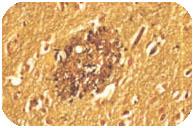
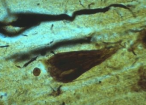
Alzheimer’s Disease got the name from Dr. Alois Alzheimer. He first noticed changes in the brain tissue of a woman who had died of an unusual mental illness. Her symptoms included memory loss, language problems, and unpredictable behavior. After she died, he examined her brain and found many abnormal clumps (now called amyloid plaques) and tangled bundles of fibers (now called neurofibrillary, or tau, tangles).

Amyloid plaques
Neurofibrillary, or tau, tangles

Alzheimer’s Disease got the name from Dr. Alois Alzheimer. He first noticed changes in the brain tissue of a woman who had died of an unusual mental illness. Her symptoms included memory loss, language problems, and unpredictable behavior. After she died, he examined her brain and found many abnormal clumps (now called amyloid plaques) and tangled bundles of fibers (now called neurofibrillary, or tau, tangles).

1906-1970

AD Assumed as Untreatable Degenerative Disease

1974-1986

Emerging Research

1974

Founding of National Institute on Aging (NIA)

The National Institute on Aging (NIA) is established as one of our National Institutes of Health (NIH). The NIA is our primary federal agency supporting Alzheimer’s research.
 

1976

“The Prevalance and Malignancy of Alzheimer’s Disease” In Journal Archives of Neurology

In the 10 years preceding his editorial, which called Alzheimer’s a “major killer” and the fourth leading cause of death in the United States (after heart disease, cancer and stroke), fewer than 150 scientific articles had been published about the disease.

Late 1970's

Cholinergic Hypothesis Suggests Treatment Possibilities

1984

Beta-Amyloid Identified as Prime Suspect in Triggering Nerve Cell Damage

BETA-AMYLOID, THE CHIEF COMPONENT OF ALZHEIMER’S BRAIN PLAQUES AND A PRIME SUSPECT IN TRIGGERING NERVE CELL DAMAGE, IS IDENTIFIED BY SAN DIEGO RESEARCHER GEORGE GLENNER.

1986

Tau Protein Identified a Key component of Tangles

This is the second pathological hallmark of Alzheimer’s disease and another prime suspect in nerve cell degeneration.
 

1987-1994

Steps Toward Treatment

1987

First Encouraging Alzheimer’s Drug Trial

Tacrine – boosts acetylcholine in the brain by interfering with acetylcholine breakdown.

1991

Alzheimer’s Disease Cooperative Study (ADCS) Launched

Funded by NIA and led by Leon Thal.

1993

First Drug Approved

Tacrine is approved; three similar drugs follow.

1994

Former U.S. President Ronald Reagan Alzheimer’s Diagnosis is Announced

m-15-pill-adderall g404-pill-adderall 720-pill pill-f7 is-an-m36-pill-adderall how-many-adderall-pills-can-be-prescribed-at-once-reddit oval-adderall-pill dog-ate-adderall-pill white-adderall-pill adderall-pill-sizes