Skip to content
Accelerating the Path to Alzheimer's Prevention
The USC Epstein Family Alzheimer’s Therapeutic Research Institute is leading groundbreaking clinical trials to find treatments and prevent Alzheimer’s disease.
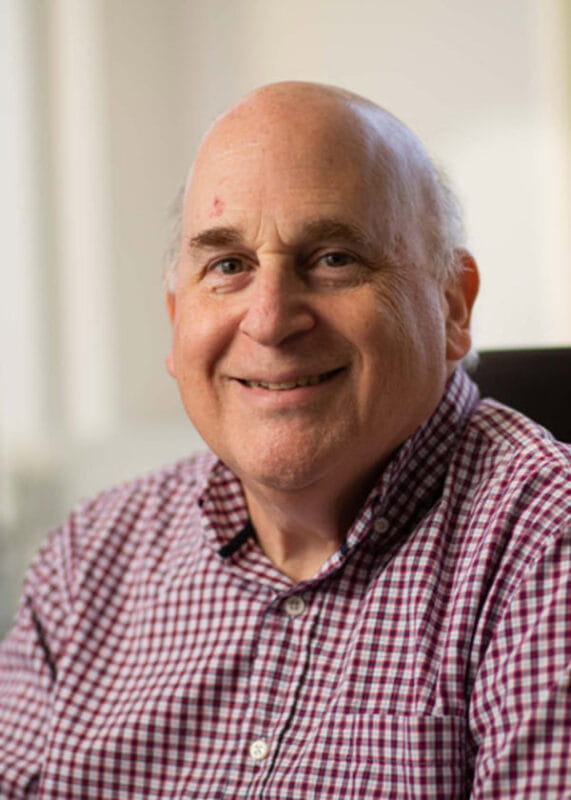
Paul Aisen, MD
Founding Director
Learn About the Rigorous Science Behind Our Trials and Why It Differentiates Us.
“Our focus is uncompromising trials and unprecedented global collaboration with both academia and industry. We want solutions where early detection can be simple, affordable and accessible.”
For more than a decade, ATRI has pioneered the most rigorous approach to Alzheimer’s clinical trials. Under Dr. Aisen’s leadership, the institute has built an unmatched infrastructure for designing and executing large-scale multicenter trials that are advancing the field toward prevention.
Dr. Aisen’s scientific philosophy centers on precision, collaboration, and the belief that Alzheimer’s disease can be prevented through early intervention and innovative trial design.
OUR MISSION AND VISION
TO PREVENT AND EFFECTIVELY TREAT ALZHEIMER’S DISEASE AND RELATED DEMENTIAS
ATRI’s collaborations are behind the latest FDA-approved drugs which slow the Alzheimer’s Disease progression. Additionally, our work has played an important role in validating the impacts of emerging biomarkers — the new blood tests — to screen for early disease detection. As a global leader in trial research, we are constantly striving to build smarter studies by analyzing not only results, but also examining our completed protocols, adapting future protocols, and sharing all data with other researchers.
We’re also focusing on new frontiers: exploring links among Alzheimer’s Disease and conditions such as Parkinson’s, Dementia with Lewy Bodies, and Down syndrome.
We now know which toxic proteins start these diseases, and we believe we have the tools to fix it.
1900-1970
First Discovery
1906
Dr. Alois Alzheimer first diagnosis
Alzheimer’s Disease got the name from Dr. Alois Alzheimer. He first noticed changes in the brain tissue of a woman who had died of an unusual mental illness. Her symptoms included memory loss, language problems, and unpredictable behavior. After she died, he examined her brain and found many abnormal clumps (now called amyloid plaques) and tangled bundles of fibers (now called neurofibrillary, or tau, tangles).
Alzheimer’s Disease got the name from Dr. Alois Alzheimer. He first noticed changes in the brain tissue of a woman who had died of an unusual mental illness. Her symptoms included memory loss, language problems, and unpredictable behavior. After she died, he examined her brain and found many abnormal clumps (now called amyloid plaques) and tangled bundles of fibers (now called neurofibrillary, or tau, tangles).
1906-1970
AD Assumed as Untreatable Degenerative Disease
1974-1986
Emerging Research
1974
Founding of National Institute on Aging (NIA)
The National Institute on Aging (NIA) is established as one of our National Institutes of Health (NIH). The NIA is our primary federal agency supporting Alzheimer’s research.
1976
“The Prevalance and Malignancy of Alzheimer’s Disease” In Journal Archives of Neurology
In the 10 years preceding his editorial, which called Alzheimer’s a “major killer” and the fourth leading cause of death in the United States (after heart disease, cancer and stroke), fewer than 150 scientific articles had been published about the disease.
Late 1970's
Cholinergic Hypothesis Suggests Treatment Possibilities
1984
Beta-Amyloid Identified as Prime Suspect in Triggering Nerve Cell Damage
BETA-AMYLOID, THE CHIEF COMPONENT OF ALZHEIMER’S BRAIN PLAQUES AND A PRIME SUSPECT IN TRIGGERING NERVE CELL DAMAGE, IS IDENTIFIED BY SAN DIEGO RESEARCHER GEORGE GLENNER.
1986
Tau Protein Identified a Key component of Tangles
This is the second pathological hallmark of Alzheimer’s disease and another prime suspect in nerve cell degeneration.
1987-1994
Steps Toward Treatment
1987
First Encouraging Alzheimer’s Drug Trial
Tacrine – boosts acetylcholine in the brain by interfering with acetylcholine breakdown.
1991
Alzheimer’s Disease Cooperative Study (ADCS) Launched
Funded by NIA and led by Leon Thal.
1993
First Drug Approved
Tacrine is approved; three similar drugs follow.
1994
Former U.S. President Ronald Reagan Alzheimer’s Diagnosis is Announced
We're the USC Epstein Family Alzheimer's Therapeutic Research Institute
For the past decade we’ve been on a path to solve the problem of Alzheimer’s Disease (AD). We have a roadmap for our research; built on amyloid treatments, add tau treatments and an array of persistent clinical studies all with one goal in mind — prevention.
Based in San Diego, California with research shared worldwide.
The Alzheimer's Clinical Trials Consortium
ATRI is the nexus for groundbreaking clinical trials. Led by USC, Harvard and The Mayo Clinic, our specialty is designing and conducting intervention research. We foster collaboration and drive innovation globally for Alzheimer’s Disease research.
Our Research + Laboratory Leaders
Paul Aisen,
Founding Director of the Alzheimer’s Therapeutic Research Institut
Alison Belsha
Director of Clinical Operations
Gustavo Jimenez-Maggiora, PhD, MBA
Gustavo Jimenez-Maggiora, PhD, MBA
Director of Informatics, Assistant Professor of Research Neurology
Cecily Jenkins, PhD
Director of Neuropsychology and Associate Professor of Clinical Neurology
Jeremy Pizzola
Director of Administration
Michael Rafii, MD, PhD
Director of Medical Safety and Professor of Neurology
Rema Raman, PhD
Director of Biostatistics, Recruitment, Engagement & Retention, Professor of Neurology
Robert Rissman, PhD
Director of Neuroscience Translational Research Division, Biomarker Lab and Biorepository
Education
Impact AD
Educational initiative providing healthcare professionals with the latest evidence-based information on Alzheimer’s disease diagnosis and management.
Continuing Education
Professional development resources and training programs for researchers and clinicians in the field of Alzheimer’s and dementia.
Student Summer Research Program
Hands-on research experience for the next generation of Alzheimer’s researchers. Open to undergraduate and graduate students.
Aresbet oyun kategorilerinin listelendiği
web sitesi yeni ziyaretçilere yol gösteriyor.
Promosyonları ve kampanyalarıyla öne çıkan
kralbet yeni üyelerine cazip fırsatlar sunuyor.
For spillere, der ønsker at drage fordel af risikofrie væddemål i forbindelse med store sportsbegivenheder, leverer
spil uden om ROFUS odds ofte de mest kreative kampagner på nettet.
Blockchain transaction verification adds an extra layer of trust to withdrawals at
don bet casino .
The customer reviews for
donbet casino consistently highlight its fast payouts and responsive team.
The winter jackpot event at
fat pirate is one of the most anticipated promotions of the casino calendar.
The mobile version of
donbet works perfectly on all devices.