OUR MISSION AND VISION
TO PREVENT AND EFFECTIVELY TREAT ALZHEIMER’S DISEASE
1906
Today
1900-1970
First Discovery
1906
Dr. Alois Alzheimer first diagnosis
Alzheimer’s Disease got the name from Dr. Alois Alzheimer. He first noticed changes in the brain tissue of a woman who had died of an unusual mental illness. Her symptoms included memory loss, language problems, and unpredictable behavior. After she died, he examined her brain and found many abnormal clumps (now called amyloid plaques) and tangled bundles of fibers (now called neurofibrillary, or tau, tangles).
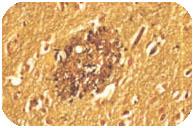
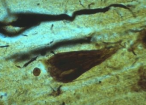
Alzheimer’s Disease got the name from Dr. Alois Alzheimer. He first noticed changes in the brain tissue of a woman who had died of an unusual mental illness. Her symptoms included memory loss, language problems, and unpredictable behavior. After she died, he examined her brain and found many abnormal clumps (now called amyloid plaques) and tangled bundles of fibers (now called neurofibrillary, or tau, tangles).
1906-1970
AD Assumed as Untreatable Degenerative Disease
1974-1986
Emerging Research
1974
Founding of National Institute on Aging (NIA)
1976
“The Prevalance and Malignancy of Alzheimer’s Disease” In Journal Archives of Neurology
Late 1970's
Cholinergic Hypothesis Suggests Treatment Possibilities
1984
Beta-Amyloid Identified as Prime Suspect in Triggering Nerve Cell Damage
1986
Tau Protein Identified a Key component of Tangles
1987-1994
Steps Toward Treatment
1987
First Encouraging Alzheimer’s Drug Trial
1991
Alzheimer’s Disease Cooperative Study (ADCS) Launched
1993
First Drug Approved
1994
Former U.S. President Ronald Reagan Alzheimer’s Diagnosis is Announced
2003-2010
Advancement in Technology
2003
Memantine is Approved
2004
Nationwide Study Launched to Establish Standards for Obtaining and Interpreting Brain Images
2005
NIA’s Alzheimer’s Disease Preclinical Drug Development Program is Established
2007
PAUL AISEN, MD NAMED NEW DIRECTOR OF ADCS
2010
An Influential Model of Biomarker Changes During Alzheimer’s Disease Progression
2011-2012
Nationalizing AD Prevention
2011
National Alzheimer’s Project Act (NAPA) Signed into Law
2012
Five Ambitious Goals to Prevent Future Cases of AD and Related Dementias
2 – Optimize Care Quality and Efficiency.
3 – Expand Supports for People with Alzheimer’s Disease and Their Families.
4 – Enhance Public Awareness and Engagement.
5 – Track Progress and Drive Improvement.
2014-2020
Foundation of ATRI & ACTC
2014
Landmark Antiamyloid Treatment in Asymptomatic AD (A4) Study Launched
2015
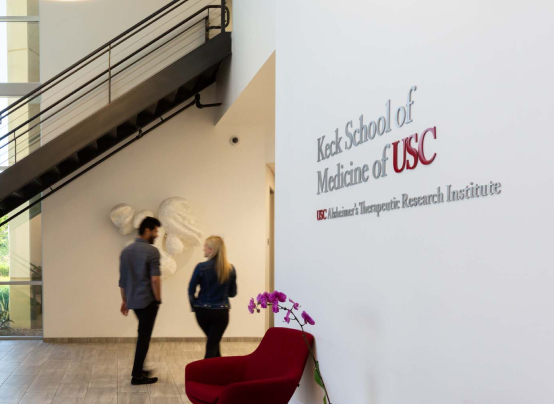
ATRI Founded as a San Diego Institute of USC
2016
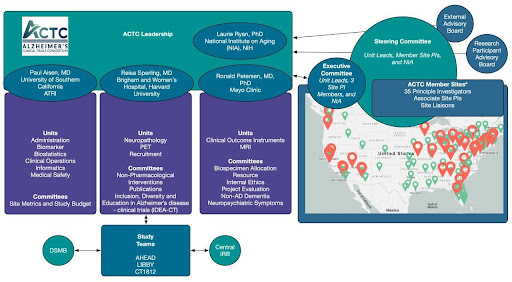
Alzheimer’s Clinical Consortium (ACTC) Formed
2020
ATRI Marks 5 Year Anniversary
2021-2023
Modern Research
2021
FDA Approved Aduhelm
2022
FDA Approves Lecanemab
2022
USC & UC San Diego Join Forces in AD Research
2023
Donanemab Significantly Slowed Cognitive and Functional Decline in Phase 3 Study of Early Alzheimer’s Disease
2023
ATRI Expands Scope
2023
Dr. Aisen Honored with Epstein Alzheimer’s Disease Director’s Chair
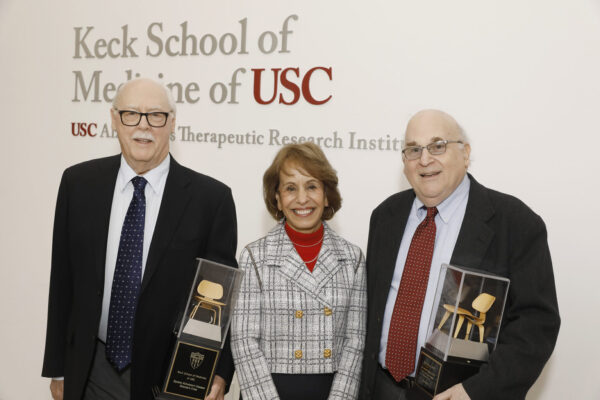
The Director’s Chair was endowed by the Epstein Family Foundation as another generous gift in a series of significant donations catalyzing Alzheimer’s research in Southern California
2023
FDA Grants Full Approval to Lecanemab for the Treatment of Alzheimer’s
On July 6, the Food and Drug Administration granted full approval to LEQEMBI (lecanemab) for the treatment of Alzheimer’s disease (AD). According to the current FDA approval, lecanemab should be initiated in patients with mild cognitive impairment or mild dementia. Lecanemab is the first approved treatment shown to slow down the progression of the disease, reduce cognitive decline, and improve daily functioning in adults with AD.
2025-Today
ATRI Renamed
2025
ATRI Renamed to Honor Daniel Epstein and Family
In December 2025, ATRI was renamed the USC Epstein Family Alzheimer’s Therapeutic Research Institute in honor of USC Life Trustee Daniel J. Epstein, his wife Phyllis and their family, the visionary philanthropic leaders fueling USC’s world-leading efforts to prevent and treat Alzheimer’s disease.
The Director’s Chair was endowed by the Epstein Family Foundation as another generous gift in a series of significant donations catalyzing Alzheimer’s research in Southern California